
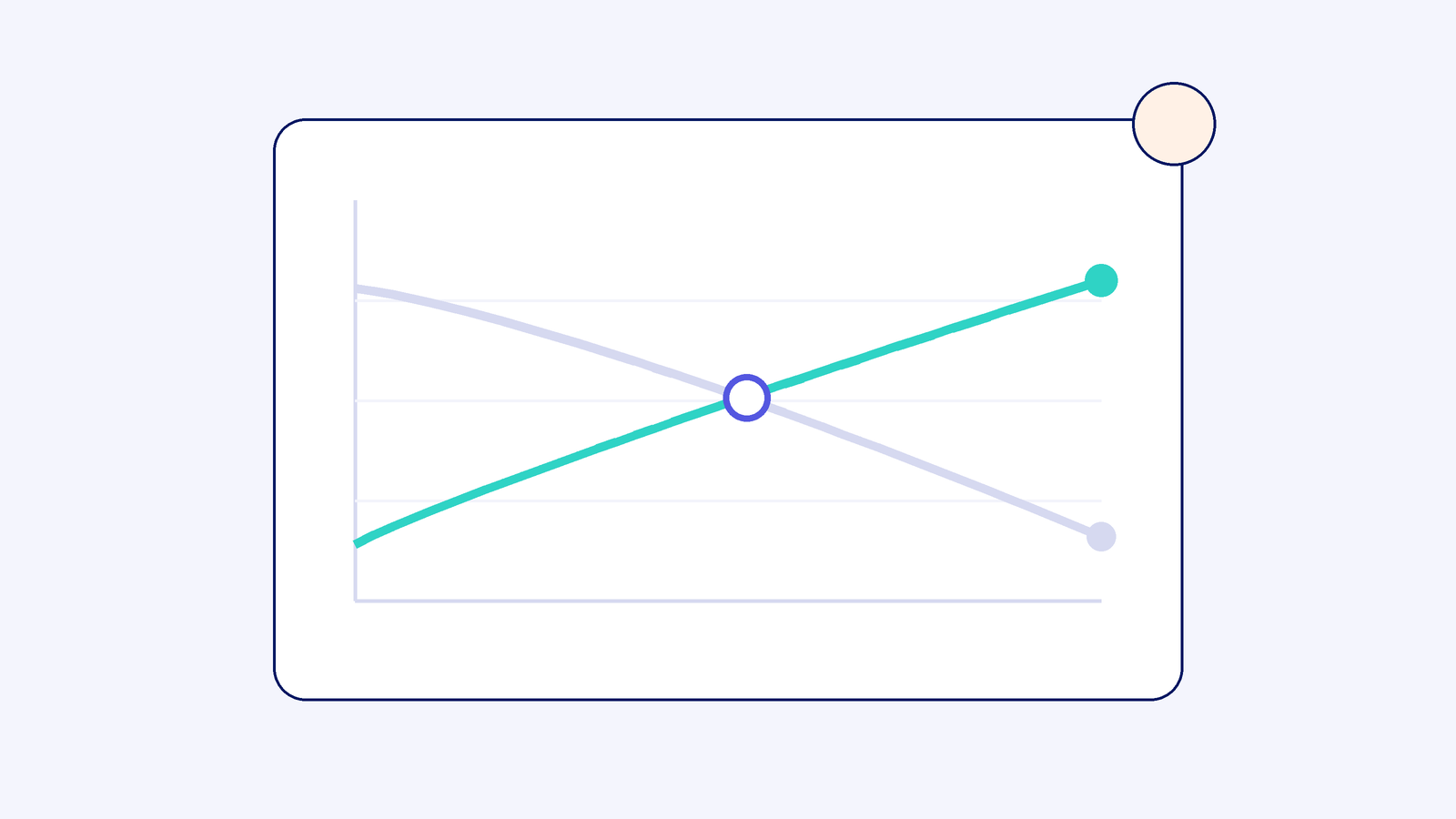
AI did not reduce the value of agencies. It collapsed the value of the executional hours agencies used to bill for, and raised the value of judgement.
AI did not reduce the value of agencies in 2026. It collapsed the price of the executional hours most agencies were built to sell, while raising the value of the judgement they were never very good at charging for. That is an uncomfortable trade for a lot of the industry, and a good one for clients.
This is an opinion piece rather than a guide, written from a year of running an agency through the change. Reasonable people in this industry disagree with most of what follows, and I have put the strongest version of their case at the end.
The short version
- Executional hours got cheap fast in 2026: keyword research, ad copy, first drafts, reporting decks. What rose in value was judgement, and who could be held accountable for it.
- Buyers should pay for outcomes and seniority rather than deliverable counts, and expect fees to hold while output volumes fall if an agency is doing this honestly.
- We already run Clear Click this way, for what that is worth. The sections below cover what has changed and what it means, whether you buy agency services or run one.
The hours that disappeared
Think about what a mid-sized search agency actually billed for five years ago. Keyword research. Meta description writing at scale. Ad copy variants. Competitor content summaries. First-draft blog posts. Monthly reporting decks. Schema markup. Audit documentation. Query categorisation.
Every one of those is now materially faster with an assistant, and several are close to free. Not better, in most cases. Faster, at a quality that is good enough for the first draft and sometimes for the final one.
The agency model was substantially a labour arbitrage: buy junior hours, sell them at a markup, supervise them lightly. When the cost of those hours falls towards zero, the arbitrage goes with it. That is what happened this year, and the agencies that have struggled are the ones whose value proposition was volume of output.
What went up in value instead
Three things, in my experience of the last twelve months.
The first is deciding what to do. An assistant will produce a competent answer to whatever question you ask it. It will not tell you that you are asking the wrong question, that the category you are optimising is the one the business is exiting next quarter, or that the honest answer is to spend the money elsewhere. Someone has to hold the commercial context, and that person needs to be senior enough to say inconvenient things to a client.
The second is verification. The failure mode of assisted work is confident plausibility. Output that reads correctly and is subtly wrong is more dangerous than output that is obviously bad, because it survives review by anyone who is not an expert. Checking has become a larger share of the job than producing, which is a genuine inversion.
The third is accountability. When anyone can generate a plan, the scarce thing is somebody who will put their name against it, be measured on it, and still be there in nine months. That is not a technology feature. It is a relationship, and it is the part of agency work that has appreciated most.
What it did to search itself
The visible change is AI Overviews and assistants absorbing informational queries. The more interesting change, at least in our own data, is on the other side: a growing share of the searches reaching client sites are long conversational prompts written by an assistant on someone's behalf.
That has a strategic consequence people have been slow to draw. Content that is specific and problem-shaped now outperforms content that is comprehensive and generic, because the query it is matching is specific and problem-shaped. The old incentive was to cover a topic exhaustively. The new incentive is to say something precise enough to be worth citing.
Which means the generic content that AI made cheap to produce is exactly the content that AI made worthless. The industry spent a year using the new tools to make more of the thing the new tools devalued. That will be the funny part in hindsight.
What this means if you buy agency services
Three practical implications.
Stop paying for volume. Deliverable counts, posts per month, number of pages optimised, all of these were always weak proxies and they are now actively misleading, because volume is the cheap part. Pay for outcomes and for the seniority of the people making the calls.
Ask directly how the agency uses AI. Not to catch them out. An agency that claims not to use it is either behind or not being straight with you, and neither is reassuring. The useful answer describes where they use it, where they do not, and how they check the output. Our own view is in the questions to ask an AI-enabled marketing agency.
Expect fees to hold while deliverable counts fall. If an agency is doing this honestly, the same fee should now buy fewer, better things and more senior attention. An agency passing on the full efficiency saving as more output is telling you what it thinks its value is.
If you want a second opinion on what you are actually paying for, that is the conversation we have with clients before any work starts. See how we scope an SEO strategy
What this means if you run one
Briefly, because this is a client-facing publication and I would rather be useful to the people reading it.
The pyramid is flattening. Fewer juniors doing production, more mid and senior people doing judgement and verification. That is difficult, because the pyramid was also the training route, and nobody has convincingly solved how you produce senior practitioners without a junior tier to grow them from. I do not think our industry has an answer to that yet, and I would be suspicious of anyone claiming they do.
The counter-argument, put properly
The strongest case against everything above runs roughly like this.
The efficiency gains are real but narrower than they look. Assisted output still needs so much correction on anything specialised that net time saved is modest, and the industry has confused a faster first draft with a faster finished job.
Scale still matters. Enterprise clients need coverage, process and continuity that a small senior team cannot supply, however good its judgement, and the pyramid exists for structural reasons that a productivity tool does not dissolve.
And the trend towards specificity may reverse. Search behaviour has shifted before and shifted back, and building a content strategy on nine months of query data is exactly the kind of overfitting our industry does regularly.
I think the first is half right, the second is largely right for enterprise and largely wrong below it, and the third is the one that could genuinely make this piece look silly in two years. Worth holding onto.
Where I have landed
The agencies worth hiring in 2027 will look more like professional service firms and less like production studios. Smaller, more senior, more opinionated, more accountable, and considerably more willing to tell a client that the thing they asked for is not the thing they need.
That is roughly the model we already run, so read this with the appropriate scepticism. But the client-side version of the argument stands regardless of who you hire: pay for judgement, verify the work, and stop counting deliverables.
If you want the practical rather than the philosophical version, our AI search optimisation guide covers what to actually do, and how to choose an SEO agency covers what to ask. Or come and argue with me about it, which I would enjoy more.