How to measure SEO ROI for a B2B company: the formula, a worked example from traffic to closed revenue, a realistic payback curve and three traps.
Somebody on the board will eventually ask what the SEO spend is giving back. It's a fair question, and it deserves a better answer than a traffic graph. The answer most boards will accept is a number: revenue or pipeline from organic search, set against what organic search cost, over a period long enough for the channel to show what it does.
We've sat in on budget reviews where a healthy programme was nearly cut because the only evidence on the table was sessions. The maths isn't hard. What takes care is deciding what to count, and over which months.
This piece gives you the SEO ROI formula, a worked example you can copy into a spreadsheet, a realistic payback curve, what to count as cost, three measurement traps, and the situations where SEO won't pay. Our B2B SEO consultancy work is built around this kind of measurement, so we'll say how we set it up along the way.
The short version
- SEO ROI is (revenue from organic-sourced leads minus the cost of SEO) divided by the cost. For B2B, count closed revenue and pipeline through the CRM, not sessions.
- A typical B2B programme at about £3,000 a month all in breaks even around month six to seven and returns roughly 200% on revenue across the first year, with most of that return landing after month nine.
- Clear Click tracks organic from first visit to closed deal in the CRM, and reports ROI on that basis from month one, even when the early months show a loss.
How do you calculate ROI for SEO?
The formula is the same one finance uses for any investment:
SEO ROI = (revenue attributed to organic search minus the cost of SEO) divided by the cost of SEO, expressed as a percentage.
So £108,000 of organic-sourced revenue against £36,000 of cost is 200%. For every pound spent, two came back on top of the pound itself.
The two inputs are where programmes go wrong. "Revenue attributed to organic" means revenue from deals whose first or main touch was an organic search visit, as recorded in your CRM. "Cost of SEO" means everything the programme consumed, not just the invoice.
One choice to make early: revenue or gross profit. Revenue is the figure most marketing teams use and it's the one in the example below. If finance prefers gross profit, run the same calculation on margin. A 60% gross margin turns a 200% revenue ROI into an 80% gross profit ROI, which is still a programme worth keeping.
Why pipeline is the honest unit for B2B
An ecommerce site can read organic revenue straight out of GA4, because the purchase happens on the page. A B2B site can't. The organic visit produces a form fill, the sale happens weeks later in a sales conversation, and the deal value is only known at the end. Measured by sessions, or even by leads, you're looking at the top of a funnel whose bottom sits in a different system.
The way we see it, the unit that matters is an organic-sourced lead followed through the CRM to opportunity and closed revenue. That needs three things: a GA4 key event for each enquiry type, an original source field on the contact record in HubSpot or whichever CRM you use, and a deal record that keeps that source. Our guide to marketing attribution for B2B goes through the set-up step by step. Do it in month one, because you can't recover the data later.
What does the calculation look like with real-shaped numbers?
Take a firm selling a £6,000 average deal to UK businesses, with a sales team that works every inbound lead. This is a worked example, not a client result. The conversion rates are a sensible starting point for B2B services and software; replace each with your own once you have 90 days of CRM data.
At the twelve-month mark the programme looks like this, per month:
- 1,500 non-branded organic sessions to commercial and guide pages
- 2% enquiry rate, so 30 organic-sourced leads
- 40% qualify after a first call, so 12 opportunities
- One in four opportunities close, so 3 deals
- 3 deals at £6,000 each, so £18,000 of organic-sourced revenue a month
Now the cost side. A retainer at £2,000 a month, roughly £500 of internal time for approvals and sales feedback, and about £500 of content the retainer doesn't cover. That's £3,000 a month, or £36,000 across the year.
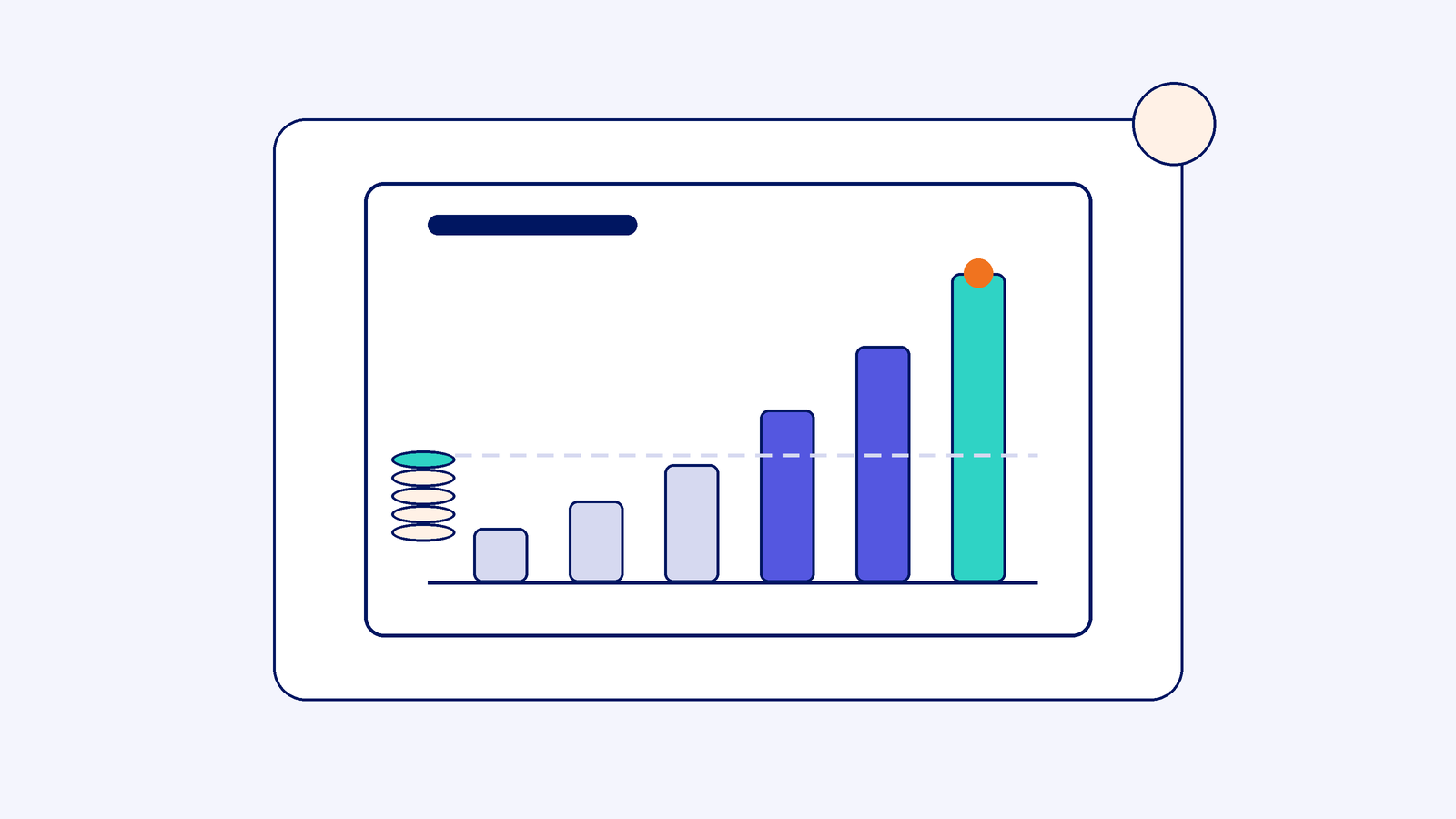
The revenue doesn't arrive at £18,000 a month from day one. Using the payback curve in the next section, months one to three produce nothing, months four to six average one deal a month (£18,000 in total), months seven to nine average two (£36,000), and months ten to twelve run at three (£54,000). Year-one organic revenue is £108,000.
Year-one ROI is (108,000 minus 36,000) divided by 36,000, which is 200%. Cumulative cost and revenue cross in month seven, which is the payback point. Year two, with the run rate held at £18,000 a month and the same cost, is £216,000 against £36,000, or 500%. That second-year figure is why we'd ask a board to judge SEO over 24 months, not 12.
Run your own version with your deal value and close rate. If the sales cycle is 90 days rather than 30, push every revenue figure three months to the right: year one drops to about £54,000, still a 50% return, with a far better year two. A longer cycle changes when SEO pays, not whether it does. Our SEO forecasting guide shows how to build the traffic side of this model from keyword data.
How long until SEO pays for itself?
Three phases, with dates more predictable than most people expect.
Months one to three: build. Technical fixes, the first batch of pages, the CRM tracking, the keyword universe agreed with sales. Organic-sourced revenue in this phase is usually zero and should be budgeted as zero. Month three feeling slow is normal.
Months four to nine: compounding. Pages start ranking on page one for the longer, more specific queries, the first organic leads arrive, and each new page lifts the pages around it. In our experience this is where most B2B programmes cross the payback point, somewhere between month six and month nine depending on the sales cycle.
Month twelve and beyond: return. The head terms start moving, the content library holds its own, and the cost is flat while the revenue isn't. The ROI figures agencies publish come from here, and they're fair to quote as long as everyone knows they describe year two, not month four.
The quarter-by-quarter version of this timeline is in how long B2B SEO takes.
63%: The share of Wigwam Holidays' website revenue in 2025, out of more than £1.4m across paid and organic, that came through the channels we run.
Source: Clear Click, published Wigwam Holidays case study.
Wigwam is a consumer business, so the revenue reads straight out of the booking system, but the point holds for B2B too. The number a client remembers is the share of revenue the channel produced, and being able to quote it depends on tracking set up before the first page goes live. The Wigwam Holidays case study has the detail.
What should you count as the cost of SEO?
The retainer is the obvious cost and usually the largest. A senior-led B2B programme in the UK starts from £1,700 a month plus VAT, with most mid-market retainers between £2,500 and £5,000. Our breakdown of what SEO costs in the UK covers the bands and what each buys.
Three costs sit outside the invoice and belong in the calculation.
- Internal time. Approvals, subject-matter interviews, sales feedback on lead quality. Four hours a week of a marketing manager's time is about £500 a month. Count it.
- Content not covered by the retainer. External writers, design, video. A B2B guide from a specialist writer is typically £300 to £600, so four a month outside the retainer adds £1,200 to £2,400.
- Development. Technical fixes often need a developer. Budget a day a month at £400 to £600 for the first quarter, less after that.
Counting the full cost makes the early ROI look worse, and we'd still do it. A figure built on the retainer alone gets taken apart the first time a finance director asks what else was spent.
Which three measurement traps make good programmes look bad?
We've seen each of these on inherited accounts, and all three are fixable in an afternoon.
Last-click attribution
GA4's default reports give the conversion to the last channel touched. In B2B, a buyer often finds you through an organic search, reads two or three pages over a fortnight, and comes back by typing your name to fill in the form. Last click hands that lead to direct, and organic shows nothing. Run first touch or data-driven alongside last click, and record original source in the CRM, which doesn't change once set.
Key events that were never set up
Many B2B sites we audit have GA4 installed and no key event on the contact form, the demo request or the phone number. The traffic is tracked and the outcome isn't, so organic can only ever be reported in sessions. One key event per enquiry type, tested with a real submission, is the highest-return hour in an SEO programme.
Branded search counted as organic growth
When a firm runs events, PR or paid media, more people search for its name, and those clicks land in the organic channel. Reported as SEO growth, they flatter the programme. Split branded and non-branded queries in Search Console, report non-branded as the SEO number, and show branded separately as a measure of the whole marketing effort. The programme will look smaller and far more credible.
An organic report that stops at sessions is usually the reason a board loses interest in SEO, so the fix is a report that starts at pipeline. See our reporting dashboard work
When will SEO ROI be poor?
There are three situations where we'd say on the first call that SEO is the wrong place for the budget, at least for now.
The market is too small. If the whole keyword universe for what you sell is under about 300 UK searches a month, first position on every term still produces a handful of leads a year, and the maths can't work at a £1,700 retainer. Account-based outreach or paid search on the few terms that exist will do more.
You need leads inside 90 days. SEO's build phase is three months long whatever anyone promises. If the pipeline has to move this quarter, paid search is the bridge and SEO is the programme you start alongside it so that next year's quarter is easier.
Nobody follows the leads up. An organic lead contacted within a day converts at several times the rate of one contacted a week later. If inbound isn't anyone's job, the leads will arrive and the ROI won't. Fix the follow-up first; it lifts every channel at once.
Everything else is fixable. A slow site, a thin content library, a tracking set-up that was never finished: these are reasons SEO hasn't paid yet, not reasons it won't.
Questions we get asked
How do you calculate ROI for SEO?
Take the revenue from deals that started with an organic search visit, subtract everything the programme cost including internal time and content, and divide by that cost. For B2B, pull the revenue from the CRM by original source rather than from GA4, over at least twelve months.
What is a good ROI for SEO?
For a B2B programme at a realistic budget, we'd expect around break-even by month six to nine, something in the region of 100% to 300% on revenue in year one, and considerably more in year two once the cost is flat and the content library is working. Anything quoted above 500% is almost always a year-two or year-three figure, and it's fair to ask which.
How long until SEO pays for itself?
Usually between month six and month nine for a B2B company with a 30 to 60 day sales cycle, later if deals take longer to close. The first three months produce little or no revenue and should be budgeted that way. If you can't carry a three-month build, paid search is the better bridge.
Is SEO worth it for B2B?
Yes, when the market has enough search volume, the business can wait two to three quarters for the return, and someone owns inbound follow-up. Where those hold, organic tends to become the lowest cost-per-deal channel by year two. Where they don't, it's better to say so early.
How do you show the board SEO is working?
Open the report with organic-sourced pipeline and closed revenue from the CRM, show the cumulative cost next to it, and mark the month the two lines cross. Put non-branded clicks and rankings on the second page as supporting evidence. A board that sees a payback month on page one rarely asks about sessions.
Where we fit
Clear Click runs SEO for B2B companies that want the channel measured in pipeline and revenue, with the CRM tracking built in month one so the ROI figure exists when the board asks. Programmes start from £1,700 a month plus VAT, and the people who scope the work are the people who do it.
For Wigwam Holidays, the channels we run produced 63% of website revenue in 2025, out of more than £1.4m in total. If you'd like a view on what a realistic return looks like for your market before committing a budget, get in touch and we'll talk it through, including when the honest answer is to wait.