Generative engine optimisation (GEO) explained: what GEO vs SEO really changes, how AI answers pick sources, a practical checklist and how to measure it.
A sales director forwards a screenshot to the marketing team. Someone asked ChatGPT for a shortlist of suppliers in your category, and the answer named three competitors and not you. It's a fair thing to be asked about, and the work that answers it now has a name.
Generative engine optimisation (GEO) is the work of making your brand easy for AI systems to find, trust and cite when they write an answer. That covers ChatGPT, Perplexity, Gemini, Copilot and the AI Overviews in Google's own results. GEO vs SEO, in one line: SEO earns you a place in a list of links, GEO earns you a mention inside a written answer, and most of the inputs behind both are the same. Buyers increasingly build shortlists this way, and a shortlist is where pipeline starts.
We'd say the overlap is bigger than the pitches suggest and the differences are more specific. Our AI search optimisation service is built on that view. This piece sets out the logic: how answer engines pick their sources, what carries over from SEO, what changes, a working checklist, how to measure progress, and how to choose a GEO agency if you decide you want one.
Three things worth knowing
- GEO and SEO share most of their inputs: a crawlable site, earned authority and expert content still decide whether an AI system can find and trust you.
- The differences are specific: entity clarity, answer-first page structure, mentions from third parties, and measuring AI visibility and referrals alongside rankings.
- Clear Click runs GEO inside its SEO programmes rather than as a separate retainer, and reports AI referrals and citations next to pipeline.
How do answer engines choose their sources?
For reference, the details differ between products and change often, so we'd treat any confident claim about a particular platform's selection formula with care. The general pattern is well documented, though, and it runs in a clear sequence.
- Retrieval: the system decides it needs current information and runs one or more web searches, often rewriting the user's question into several narrower queries.
- Grounding: it reads a handful of the pages those searches return and builds its answer on them, rather than relying only on what the model learned in training.
- Citation: it names or links some of the sources it used, usually the ones that answered a specific part of the question most clearly.
In plain English: before an assistant recommends anyone, it usually runs a search much like your buyers do. If your page doesn't show up for that search, it can't be read, and a page that can't be read can't be cited.
We can see this in our own data. In a three-month UK export from Search Console, our query list was full of long, conversational prompts that look like AI assistants running a Google search on someone's behalf. One was a full sentence asking how a UK CMO should choose an AI search optimisation partner. For prompts like that, clear-click.com ranked in positions 1 to 8. For short, generic definitional queries, we sat between 30 and 70.
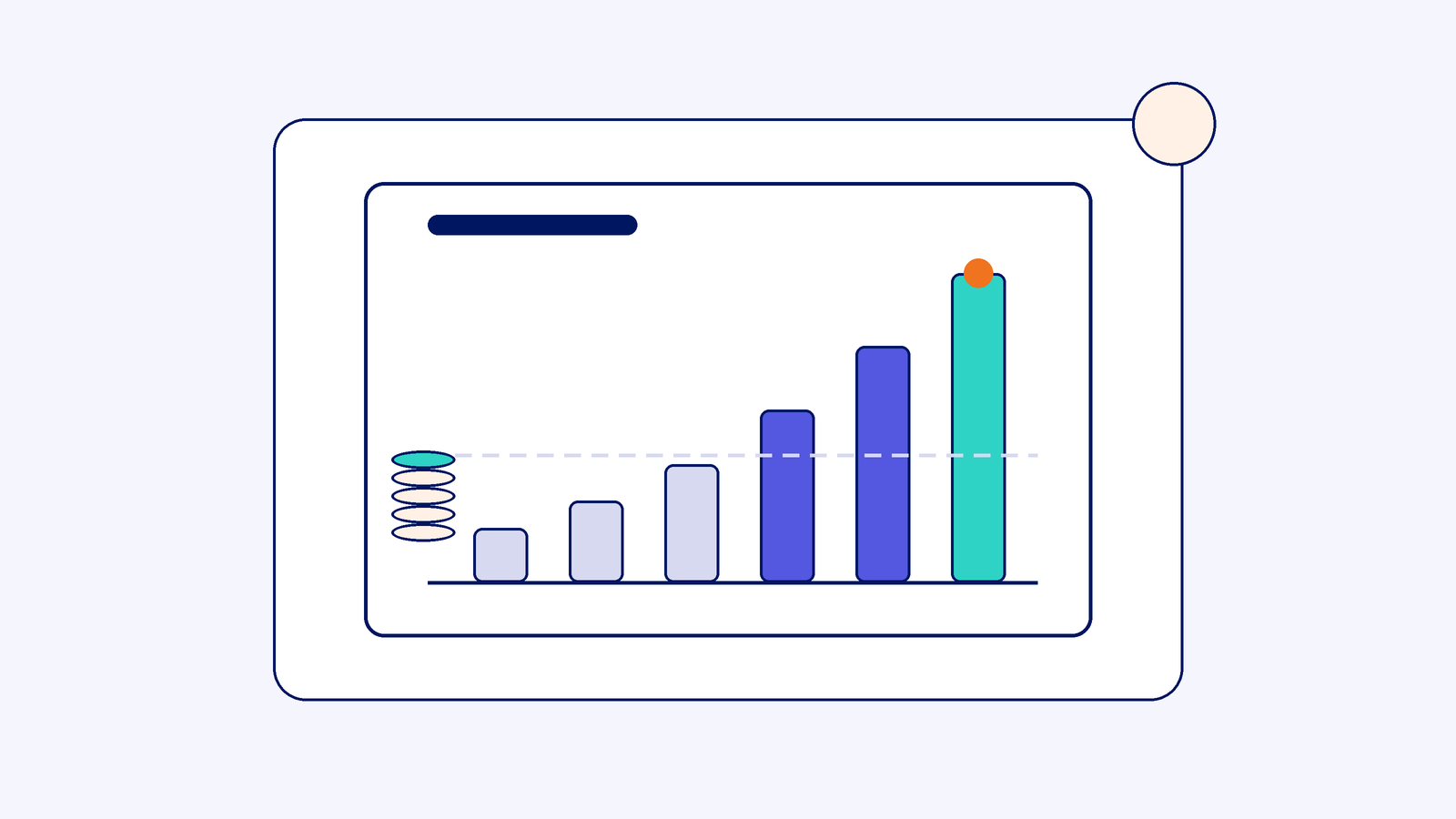
Positions 1 to 8: where clear-click.com ranked for long, conversational, AI-assistant-style prompts in Search Console, against positions 30 to 70 for short definitional queries.
Source: Clear Click's own Google Search Console data, UK, three-month export.
What that tells us is that AI assistants pull from specific, well-structured, expert answers to long questions. Our pages were written to answer real buyer questions in full, and that format suits the searches assistants run. The same pages were weak contenders for one-line definitions, where large publishers and glossaries hold the top spots.
GEO vs SEO: what stays the same?
A great deal. If you have invested in SEO properly, you have already done a large share of GEO, and the foundations line up closely.
Crawlability. AI retrieval depends on search indexes and on crawlers being able to fetch and read your pages. A page blocked in robots.txt, hidden behind scripts that never render, or missing from the index is invisible to both. Several AI companies also run their own crawlers and publish how to allow or block them, so it's worth checking your robots.txt says what you intend.
Authority. Systems choosing sources favour ones that other credible sources agree with. Links, mentions and reputation still do the heavy lifting, exactly as they do for rankings.
Content quality. A page that answers the question fully, written by someone who knows the subject, is the page that ranks and the page that gets quoted. Thin pages written around a keyword do poorly on both counts.
That should be reassuring. Nothing you've built for SEO is wasted, and on most sites the existing work is a sound base. Our AI search optimisation guide for UK brands goes further into the technical foundations.
What changes with generative engine optimisation?
Four things move, and each one has a practical consequence for how pages are written and how results are reported.
Entity clarity
An entity is something a machine can identify without ambiguity: your company, your people, your services, the markets you work in. AI systems assemble answers from facts about entities, so those facts need to match everywhere. Same company name, same description of what you do, same leadership, on your site, in your Organization schema, on LinkedIn and in directory listings. If your homepage says one thing and your Companies House description says another, a machine has to guess, and guessing tends to favour someone else.
Answer-first structure
Grounding searches arrive as full questions, so pages that answer the question in the first two sentences and then expand are easier to quote. Question-shaped headings help, because they line up with how prompts are phrased. A section that opens with background and reaches the point in paragraph four makes it harder for a system to lift a clean answer. We've watched the same shift in Google's own results, covered in our piece on how People Also Ask answers became AI Overviews.
Being cited by third parties
In classic SEO a link from a trusted site is the currency. In GEO a mention counts too, linked or not, because the system is reading the web for corroboration. Trade publications, comparison articles, podcasts with transcripts, review sites and industry bodies all feed it. When credible sources describe you the same way you describe yourself, you become a safer source to name.
Measuring AI visibility and referrals
Rankings and sessions don't show whether you're named inside an answer. GEO adds two numbers to the report: how often you're cited for the prompts that matter, and how much traffic and pipeline arrives from AI assistants. We cover both further down.
What goes on a practical GEO checklist?
This is the order we work in, because each step makes the next one count. Run it in sequence rather than all at once.
- Confirm search engines and the AI crawlers you care about can reach and render your key pages.
- Write one consistent description of what you do, who for and where, and use it on your site, in schema and on your main profiles.
- List the 20 to 30 questions buyers ask before they buy, using Search Console, sales calls and support tickets.
- Give each important question a page, or a clearly headed section, that answers it in the first two sentences.
- Put named authors with real credentials on expert content, and keep their bios consistent across the web.
- Keep facts current: prices, service lists, locations and dates go stale fastest and are the details assistants repeat.
- Earn mentions where your buyers read, through digital PR, contributed articles and real customer reviews.
- Set up measurement before changing anything, so you have a baseline to compare against.
Everything on that list is fixable, and most of it is a few weeks of focused work rather than a rebuild. The question list does the most good for the least effort, so if you start anywhere, start there.
Much of this checklist is SEO groundwork, so it usually sits best inside one programme built on one keyword universe. See how our SEO programmes work
How do you measure GEO?
We use three measures, ordered by how close they sit to revenue.
AI referral traffic. In GA4, sessions from assistants that pass a referrer show up under their own domains, such as chatgpt.com or perplexity.ai. Group them into one custom channel so you can see the trend and, more usefully, the enquiries and pipeline they bring. Not every assistant passes a referrer, so treat the figure as a floor.
Citation tracking. Keep a fixed list of prompts your buyers would ask, run them on a schedule across the assistants that matter to you, and record whether you're named, linked or absent. Answers vary from one run to the next, so read the pattern over weeks rather than any single result.
Search Console signals. Long, conversational queries in your query report suggest assistants are searching on your topics, and your position for them shows whether you're in the pool they read from. That is how we found the pattern described earlier.
This is the least tidy part of GEO, and we'd rather say so up front. No tool we know of gives a complete count of AI citations, and nobody can promise you a mention in a given assistant, us included, because the answer shifts with the wording of the prompt. What we can do is show the direction of travel and tie it back to enquiries, which is what the board will ask about anyway. For Google specifically, our piece on what earns a citation in AI Overviews covers what we've seen work.
How do you choose a GEO agency?
You may not need a separate one. If your current SEO agency already does strong technical and content work, a useful first step is to ask how they'd extend it to AI search. One team working from one plan usually beats two teams optimising the same pages for different reasons.
If you're comparing agencies, a good answer to "what does your GEO work involve?" sounds specific. It mentions crawl and render checks, entity and schema work, a content plan built from real buyer questions, digital PR for third-party mentions, and reporting that puts AI referrals and citations next to pipeline. A less helpful answer leans on a single proprietary visibility score without explaining what sits underneath it.
Four questions tend to separate the two quickly:
- Which prompts will you track, and how did you choose them?
- How will you separate AI referral traffic in our analytics?
- What will you change on our site in the first 90 days, and why in that order?
- How does this connect to our SEO and paid search?
On budget, AI search work with senior time on it sits in the same range as a serious SEO programme. Ours start from £1,700 a month plus VAT, with AI visibility built in rather than sold on top.
Questions we get asked
What is generative engine optimisation?
Generative engine optimisation is the practice of making your brand easy for AI systems such as ChatGPT, Perplexity, Gemini and Google's AI Overviews to find, trust and cite in their answers. It builds on SEO, adding entity clarity, answer-first content, third-party mentions and measurement of AI referrals.
Is GEO replacing SEO?
No. AI assistants with web access usually run searches before they answer, so ranking well for the right queries is still how you get read in the first place. GEO adds to SEO rather than replacing it, and the two work best as one plan.
How should a UK CMO choose an AI search optimisation partner in 2026?
Ask what the work involves in deliverables, how AI referrals will be tracked in your analytics, and how the results connect to pipeline. A strong partner will explain their prompt list and their first 90 days in plain terms, and will be clear about what can't be guaranteed.
How can we tell if ChatGPT is recommending our brand?
Run a fixed set of buyer-style prompts on a regular schedule and record whether you're named or linked, then check GA4 for referral sessions from chatgpt.com. Answers vary between runs, so the trend over several weeks matters more than any one result.
Is answer engine optimisation the same as GEO?
Close enough that most people use the terms interchangeably. AEO grew out of featured snippets and voice search and focuses on being the direct answer, while GEO covers being cited inside longer AI-written answers. LLM SEO and generative search optimisation are further names for the same goal.
How long does GEO take to show results?
Technical and entity fixes can show up within weeks, as soon as pages are recrawled. Third-party mentions and authority take longer, usually a few months, which is the same rhythm as a well-run SEO programme.
Where we fit
We're a UK B2B search and CRM consultancy, and we run GEO as part of SEO programmes for companies that sell considered products and services. Our own Search Console data is the clearest proof we have: long, buyer-style prompts that look like AI assistant searches put clear-click.com in positions 1 to 8, because the pages answer real questions in full.
If you'd like a second view on how visible your brand is in AI answers today, our AI search optimisation page sets out what the work involves, or you can get in touch and we'll take a look.