
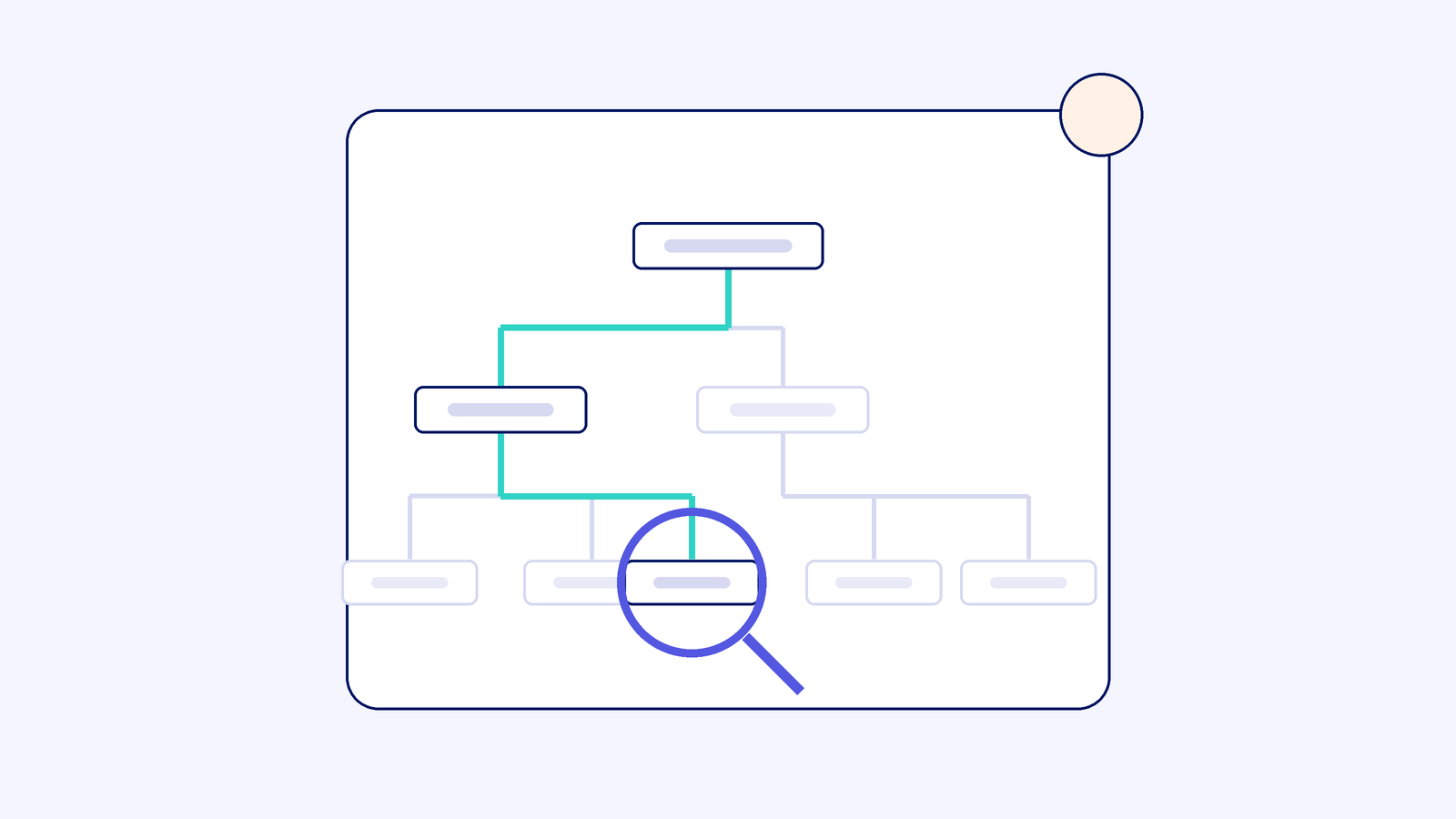
What a proper ecommerce SEO audit covers, in the order we run it: crawl economics, category architecture, product data, demand, authority and AI readiness.
A good ecommerce SEO audit tells you what to fix first and what fixing it is worth. Here are the six stages we work through, in order, and the findings that usually pay for the engagement on their own.
An ecommerce SEO audit is a structured review of everything that decides whether an online store can be found, crawled, understood and recommended. A thorough one covers six areas in sequence: crawl economics, category architecture, product data quality, demand mapping, authority, and AI search readiness. It should finish with a prioritised list of fixes ranked by revenue impact rather than by a tool's severity score.
Most audits we are asked to review do not do that. They are a crawler export with commentary. Two hundred issues, colour coded, no sense of which three would move the number. The store owner reads it, agrees it is thorough, and files it. Nothing changes.
The framework below is the one we run before we touch a site. It is deliberately sequential, because the answers from each stage change what matters in the next one.
- Six sequential stages make up the audit: crawl economics, category architecture, product data quality, demand mapping, authority, and AI search readiness, each one changing what the next reveals.
- Positions 8 to 20 in Search Console are usually the fastest revenue in the whole audit, because the ranking work is largely done and what is missing is a title, an answer, or a link.
- This is the six stage audit Clear Click runs before touching a client's site. The full method is below.
Before you start: agree what the audit is for
The most useful question at the start of an audit is not technical. It is commercial. Which categories carry the margin? Which products are you trying to grow versus clear? Is the goal more revenue from the same catalogue, or visibility for a range you have just launched?
Without that, every finding gets weighted the same, and a broken canonical on a discontinued line reads as urgent as a category page that cannot rank. With it, you can sort the findings by what they are actually worth. We ask for revenue by category, margin bands if the client is comfortable sharing them, and the merchandising plan for the next two quarters.
This is also where we agree what the audit does not cover. An SEO audit is not a UX audit, a CRO audit or a platform review, although it will surface things that belong in all three. Saying so up front stops the document sprawling into a wish list.
Stage one: crawl economics
Ecommerce sites do not have a crawling problem in the way small sites do. They have a crawl allocation problem. A store with 4,000 products can easily generate several hundred thousand crawlable URLs once filters, sort orders, pagination and session parameters are counted. Google will crawl a finite share of them, and if that share is spent on filter combinations nobody searches for, your new season category pages wait.
Real URL count versus intended URL count
Crawl the site, then compare what the crawler found against the sitemap and the product feed. The gap is where the problem lives.
Faceted navigation behaviour
Which filter combinations are linked, which are crawlable, which are indexable, and which of them have genuine independent search demand. The answer for most stores is that a small number of filters deserve indexable pages, brand within category and sometimes size or colour in fashion, and the rest should be closed off.
Log files, where we can get them
Server logs are the only source that tells you what Googlebot actually did rather than what you assume it did. On a large catalogue this is usually the single most valuable input in the whole audit, and it is the one most audits skip because the client has to go and ask the hosting provider for it.
Response codes at scale
Not just the count of 404s, but the pattern. Discontinued products returning 404 with no redirect and no replacement suggestion is a revenue leak and a crawl waste at the same time.
Stage two: category architecture
Category pages are the most valuable commercial pages on an ecommerce site and the most consistently underbuilt. They match the way people search, they survive stock changes, and they can rank for terms no individual product will ever reach.
The audit question is whether the architecture mirrors how buyers shop or how the business is organised internally. Those are rarely the same thing. Merchandising teams build navigation around brands and supplier relationships. Buyers search by problem, use case, size, occasion and price. Where the two diverge, there is either a missing category page or a category page targeting a term with no demand.
We map every category and subcategory against search demand, then look for three things. Categories that exist with no demand behind them, which dilute internal linking for no return. Demand with no category page behind it, which is the opportunity list. And categories competing with each other for the same term, which is the cannibalisation list.
Depth matters too. If a buyer needs five clicks to reach a high-margin subcategory, so does a crawler, and the internal link equity thins out on the way.
Stage three: product data quality
This is where most stores are weakest, and it is rarely because anyone made a bad decision. It is because product data comes from suppliers, gets imported in bulk, and nobody owns it afterwards.
Duplicate descriptions
Manufacturer copy used verbatim means your product page is one of forty near identical pages. Google picks one and it is usually not yours. We sample across the catalogue and quantify how much of the range is affected, then work out which products justify original copy on commercial grounds. Rewriting 4,000 descriptions is not a plan. Rewriting the 200 that carry 60 per cent of the revenue is.
Variant handling
Colour and size variants can be separate URLs, parameters, or a single page. Each is defensible. Doing all three inconsistently across the catalogue is not, and that is what we usually find.
Structured data completeness
Product schema with price, availability, currency and review data is what earns the rich result. The audit checks not just whether it is present but whether it is accurate, because incorrect availability data is worse than none.
Out of stock and end of life handling
What happens to a product page when the product goes? Stores that soft-404 it lose the accumulated authority. Stores that leave it up with no stock and no alternative frustrate the buyer. There is a middle path and most catalogues have not chosen one.
Stage four: demand mapping
By this stage we know what the site can do technically. Now we work out what it should be trying to rank for.
Demand mapping is keyword research done against a commercial structure rather than a spreadsheet. Every meaningful term gets assigned to exactly one page type: transactional terms to products, comparison and category terms to category pages, research terms to guides. Terms that have no home get flagged as content gaps. Terms with two homes get flagged as cannibalisation. Our guide to commercial intent keyword strategy sets out the method.
Two things we always check that generic audits miss. First, the queries the site already earns impressions for in Search Console but does not click on. Positions 8 to 20 on high volume terms are usually the fastest revenue in the whole document, because the ranking work is largely done and what is missing is a title, an answer, or a link. Second, the language customers actually use versus the language the category tree uses. Merchandising says outerwear. Buyers search waterproof jacket.
Stage five: authority and trust
Two stores with identical technical health and identical content will separate on authority. The audit looks at the link profile, but more usefully at the gap between your profile and the profile of whoever occupies positions one to three for your money terms.
We look at referring domain quality rather than count, at whether links point at the commercial pages or only at the homepage and blog, and at whether there is anything about the business that could plausibly earn coverage. Original data, a genuine specialism, a founder with something to say. Most ecommerce link building fails because there is nothing to link to, not because the outreach was poor.
Trust signals sit alongside this. Reviews on platforms buyers already use, consistent business information, delivery and returns clarity, and third-party mentions all feed both traditional rankings and the confidence with which an AI system will name you. This is covered in more depth in our guide to authority building and off-page SEO.
Stage six: AI search readiness
This stage did not exist in the audits we ran three years ago and it is now one of the first things clients ask about.
The practical checks are narrow and worth doing. Does the first screen of each high-value page answer the question a buyer would put to an assistant, in plain language, before the narrative starts? Is there organisation and product schema an AI crawler can read without executing JavaScript? Is there an llms.txt file describing who you are and what you sell? Are AI referrals segmented in analytics so you have a baseline, however small it currently looks?
Then the harder one. Run the twenty questions your buyers would actually ask an assistant, and see who gets named. Not best running shoes, but which UK retailer has the widest range of wide-fit walking boots and free returns. The stores that get cited tend to be the ones whose pages state specifics plainly. Ranges, sizes, delivery terms, guarantees, in text rather than in an image or a tab that loads on click.
We cover the mechanics in the AI search optimisation guide and the strategic case in GEO vs SEO.
How we prioritise the findings
Every finding gets three numbers: estimated revenue impact, effort, and confidence. Revenue impact comes from the demand mapping work, so it is grounded rather than guessed. Effort comes from a conversation with whoever will do the work, because a fix that is trivial on Shopify can be a quarter of development on a bespoke platform. Confidence is our honest read on how sure we are.
Sorting by impact over effort, weighted by confidence, produces a list that a team can actually start on Monday. Usually the top five items are unglamorous. A title rewrite on the six category pages sitting at position 11. A canonical fix on the filter set. Original copy on the two hundred products that matter. None of it is clever. All of it is worth more than the clever things further down.
The audit is not the deliverable. The sequenced plan is. If you want to see how that plan turns into an engagement, our methodology sets out how we run the work afterwards.
Questions we get asked about ecommerce SEO audits
What is an ecommerce SEO audit?
A structured review of an online store's ability to be found, crawled, understood and recommended by search engines and AI assistants, ending in a prioritised list of fixes ranked by commercial impact. It differs from a general SEO audit mainly in the weight it puts on crawl allocation, category architecture and product data.
How do agencies adapt an SEO checklist for ecommerce?
The technical checks stay similar. What changes is where the value sits. On a lead generation site, the service pages and the blog carry the load and there might be sixty URLs in total. On a store, the category pages carry the load, the catalogue generates the crawl problem, and the product data is supplier-controlled rather than written in house. A checklist built for lead generation will pass a store that is quietly wasting most of its crawl budget.
Can ChatGPT do an SEO audit?
It can do parts of it well. Reviewing a set of title tags, drafting schema, spotting patterns in an export, explaining what a finding means: all of that is faster with an assistant, and we use them daily. What it cannot do is get your server logs, know that the category with the technical problem is also the one you are exiting next quarter, or take a view on whether a fix is worth the development time. The judgement stays human. The grunt work does not need to be.
SEO audit or technical SEO audit?
A technical audit stops at crawling, indexing, rendering and site health. A full SEO audit adds demand mapping, content and authority, which is where most of the commercial upside is. We offer both, and for stores that have never had either, the full audit is usually the better first step. Our piece on technical SEO audit services covers the narrower version.
How often should a store be audited?
A full audit once a year, and a lighter quarterly pass against the ecommerce SEO checklist. Stores change weekly. Products retire, categories merge, templates ship, and regressions are much cheaper to fix as corrections than as recoveries.
What does an ecommerce SEO audit cost?
It depends almost entirely on catalogue size and platform complexity, because those drive the hours. A small store on a standard platform is a different piece of work to a 40,000 SKU catalogue with three regional storefronts. We would rather scope it properly than quote a number that means nothing, so we talk it through first. Our view on pricing generally is in what SEO costs in the UK.
Where this usually leads
The pattern is consistent enough to predict. The technical findings are real but rarely transformative on their own. The category architecture work is where the growth is. The product data work is the least popular and the most durable. And the AI readiness work, which feels speculative to some clients, keeps turning out to be the same work that improves the traditional result, because both systems reward pages that answer plainly.
That discipline is how Wigwam Holidays generated over £1.4m in tracked revenue in 2025. Not from a single fix, but from an audit that put the right five things at the top of the list.
Platform matters to what the audit finds, too. The same six stages surface different problems on different stacks, which is why we keep dedicated guides to Shopify SEO, WooCommerce SEO and Magento SEO, and run Shopify SEO as a dedicated service.
If you would like a senior read on where your store stands, or a second opinion on an audit someone else has delivered, get in touch. Our ecommerce SEO service page sets out how we work with retailers.